How FurtherTV Works for Rights-Holders
A new way for content owners to monetize library content in the FAST era
The FAST and AVOD market has created a major opportunity for rights-holders. Hundreds of free, ad-supported streaming channels need a constant supply of high-quality programming to keep audiences engaged, refresh schedules, fill underperforming dayparts, and expand into new genres.
But for many rights-holders, licensing content into FAST channels is still too slow, fragmented, and manual.
Deals are often negotiated one channel at a time. Screeners are passed around by email. Rights information lives in spreadsheets. Delivery specs vary by platform. Reporting arrives late, if at all. Invoicing can be inconsistent. Smaller or mid-sized content libraries often get overlooked because operators do not have an easy way to discover, evaluate, and license them.
FurtherTV solves that problem.
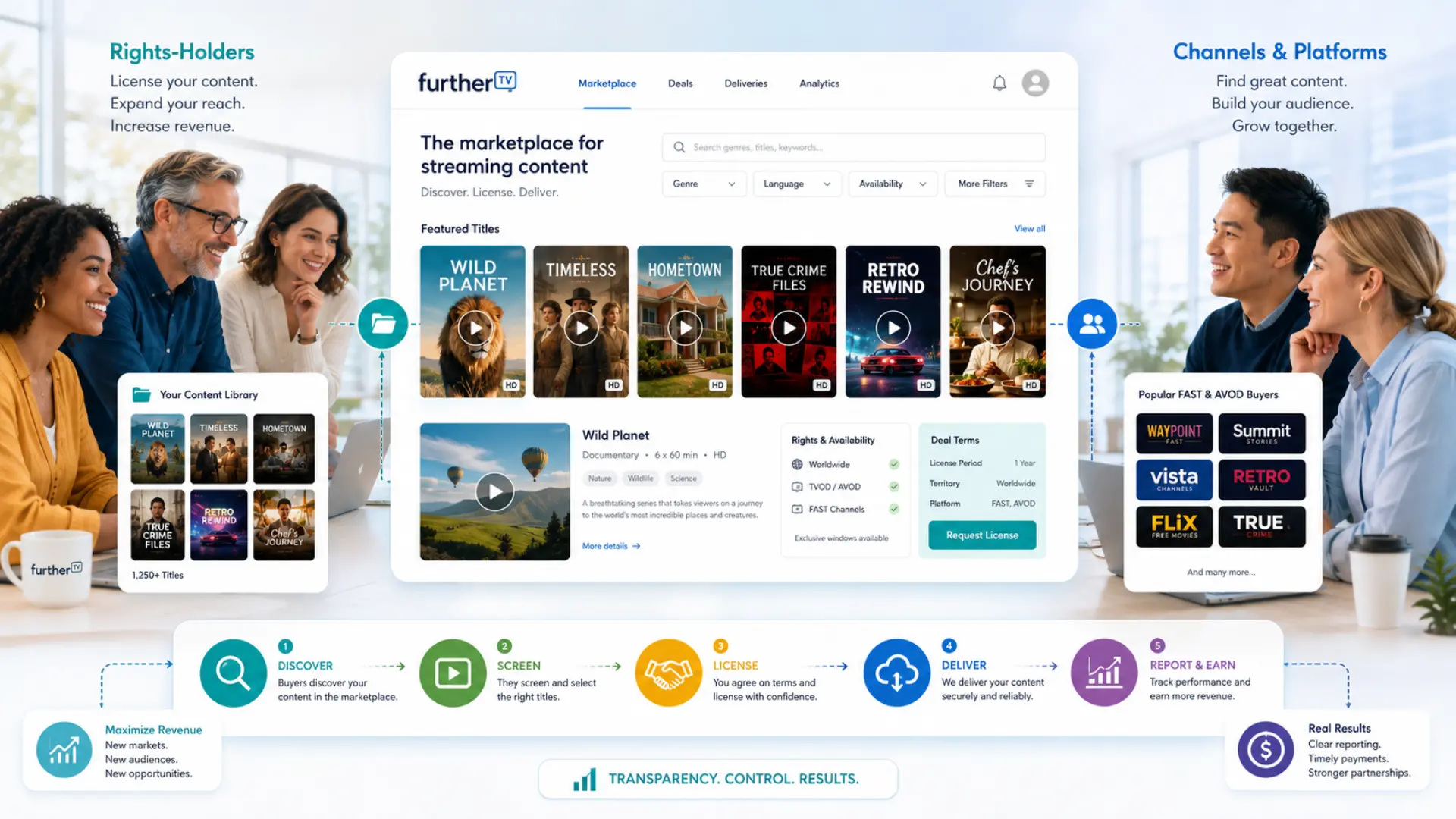
FurtherTV is a content licensing marketplace designed specifically for FAST channels, AVOD platforms, and digital video operators that need high-quality backfill and refresh programming. For rights-holders, it creates a simpler, more scalable way to get content discovered, licensed, delivered, tracked, and monetized across a growing network of channel partners.
Instead of relying only on traditional sales outreach, manual deal flow, and spreadsheet-based catalog management, rights-holders can use FurtherTV as a marketplace layer that makes their content easier for operators to find, evaluate, and license.
What FurtherTV gives rights-holders
At its core, FurtherTV helps rights-holders turn eligible library content into a more liquid, discoverable, and repeatable licensing opportunity.
The platform is built around a simple idea:
Make it easier for channel operators to say yes.
That means giving operators a clean way to search available content, preview titles, understand rights and terms, select programming, and receive content through a streamlined delivery process. For rights-holders, that creates more opportunities for licensing without requiring each deal to be managed manually from scratch.
FurtherTV helps rights-holders with five major needs:
-
Discovery — helping channel operators find their content.
-
Presentation — making titles look professional and easy to evaluate.
-
Standardized licensing — reducing friction around deal terms.
-
Delivery — simplifying the handoff to channel operators.
-
Reporting and monetization — providing usage visibility and consolidated licensing activity.
Why rights-holders need a marketplace approach
The FAST market is large, but it is also operationally messy.
Channel operators need content, but they often do not have the bandwidth to review endless catalogs, chase rights information, negotiate custom terms, ingest files manually, and reconcile multiple vendors. As a result, many operators default to a limited group of familiar suppliers, even when better or more relevant content is available elsewhere.
That creates a bottleneck for rights-holders.
A producer, distributor, or library owner may have thousands of hours of valuable programming, but if that content is not easy to discover, screen, license, and deliver, it may never make it into a channel schedule.
FurtherTV is designed to remove that bottleneck.
For rights-holders, the platform acts as a new licensing channel that sits between their library and the growing universe of FAST and AVOD buyers. It does not replace direct sales relationships. Instead, it complements them by creating a more efficient, scalable way to expose content to qualified operators who need programming now.
Step 1: Rights-holders onboard their catalog
The process begins with catalog onboarding.
Rights-holders provide metadata, availability information, rights details, artwork, screeners, delivery assets, and commercial preferences for the titles they want to make available through FurtherTV.
This may include:
-
Series
-
Feature films
-
Documentaries
-
Lifestyle programming
-
Sports and event content
-
Travel shows
-
Food programming
-
Reality and unscripted content
-
Kids and family programming
-
Niche genre libraries
-
International content
-
Evergreen library content
-
Short-form or long-form programming
FurtherTV’s goal is not simply to store titles. The goal is to make the catalog commercially usable.
That means turning a rights-holder’s library into structured marketplace inventory that operators can actually search, compare, screen, and license.
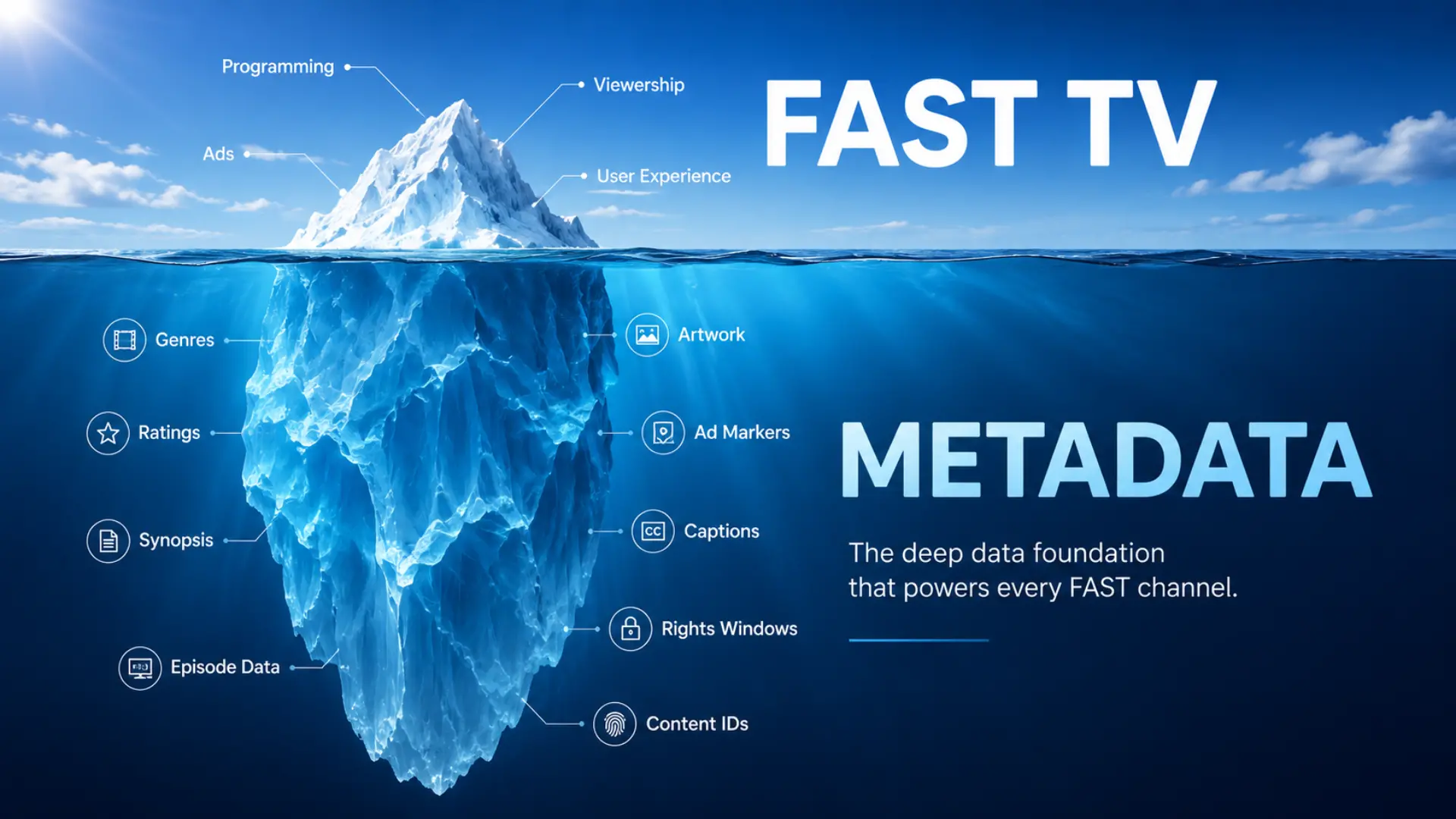
Strong metadata matters. Genre, duration, language, ratings, production year, talent, synopsis, keywords, rights windows, territories, available formats, and content type all help determine whether a title appears in the right operator searches.
For rights-holders, this improves the chance that the right content gets surfaced to the right channel buyer at the right time.
Step 2: Content becomes discoverable in a marketplace environment
Once onboarded, eligible content can be presented inside the FurtherTV marketplace.
The operator experience is designed to feel more like a modern content discovery platform than a traditional rights catalog. Instead of digging through static spreadsheets or PDF line sheets, channel operators can search and browse available programming through a cleaner, more intuitive interface.
For rights-holders, this is a major advantage.
Their content can be discovered based on real programming needs, such as:
-
“I need 100 hours of crime documentaries.”
-
“I need food and travel programming for weekend blocks.”
-
“I need family-safe content for daytime scheduling.”
-
“I need sports-adjacent programming.”
-
“I need evergreen documentary content.”
-
“I need unscripted series with multiple episodes.”
-
“I need backfill content for an underperforming FAST channel.”
-
“I need content that can be delivered quickly.”
This shifts rights-holder visibility from passive catalog distribution to active marketplace discovery.
The more complete and well-positioned the rights-holder’s content is, the more likely it is to be found by operators with specific channel needs.
Step 3: Operators preview content through a screening room
One of the biggest obstacles in licensing is evaluation.
Operators need to know whether a title fits their brand, audience, schedule, ad environment, and channel strategy. Rights-holders need a way to present content professionally without sending files manually or managing one-off screener links for every prospective buyer.
FurtherTV addresses this through a screening-room style experience.
Operators can preview selected titles, review metadata, assess quality, and understand how the content might fit into their programming strategy. This reduces friction in the buyer’s evaluation process and gives rights-holders a more polished way to showcase their content.
The screening room also helps rights-holders avoid the common problem of content being judged only by a title list. A great show can be ignored if the buyer only sees a spreadsheet row. When operators can see artwork, synopsis, metadata, and preview materials in context, the content has a better chance to stand out.
Step 4: Standardized terms reduce deal friction
Many promising licensing opportunities stall because deal terms take too long to negotiate.
FAST and AVOD operators often need speed. They may be filling schedules, launching new channels, testing content blocks, or replacing underperforming programming. If every deal requires a custom negotiation, legal review, manual approvals, and back-and-forth documentation, the operator may simply move on.
FurtherTV is designed to reduce that friction through standardized licensing workflows.
For rights-holders, this means they can define the commercial and rights parameters under which content may be licensed, while giving operators a clearer path to transact.
Standardized terms can help address questions such as:
-
What territories are available?
-
What platforms or use cases are permitted?
-
Is the content available for FAST, AVOD, or both?
-
What rights window applies?
-
What revenue-share or licensing structure applies?
-
Are there exclusivity restrictions?
-
Are there category or channel restrictions?
-
What delivery assets are available?
-
What reporting obligations apply?
The purpose is not to eliminate business control. Rights-holders still need to define what they are willing to license and under what conditions. The purpose is to make those rules easier to understand and execute at scale.
For rights-holders, standardized terms can turn licensing from a bespoke process into a repeatable revenue channel.
Step 5: Operators license content for backfill, refresh, and channel expansion
FurtherTV is particularly valuable for the type of content need that is common across FAST channels: backfill and refresh programming.
FAST operators often have channels that need additional hours to improve variety, reduce repetition, test new programming themes, or support better audience retention. A channel may already have anchor programming, but still need supplemental content to fill schedules intelligently.
This is where rights-holders can benefit.
Many libraries include shows that may not command premium exclusive deals on their own but can perform well as supporting programming in the right channel environment. A documentary series, travel show, reality format, food series, or niche factual library may be very useful to an operator that needs reliable programming depth.
FurtherTV creates a marketplace where this kind of content can be matched with practical programming demand.
Rights-holders can monetize content that might otherwise sit underexploited, especially if it has limited current exposure in FAST or AVOD.
Step 6: Content delivery is streamlined
Licensing is only part of the problem. Delivery is often where deals become operationally painful.
Operators may need files, metadata, artwork, captions, schedules, MRSS feeds, or platform-specific ingest packages. Rights-holders may have content stored in multiple places or formatted for different historical distribution partners.
FurtherTV is designed to simplify this handoff.
The platform can support a more automated delivery workflow, including structured metadata and integration-friendly delivery methods such as MRSS pipelines. This helps operators get licensed content into their systems more quickly and reduces the operational burden on rights-holders.
For rights-holders, streamlined delivery has a direct commercial benefit: the easier content is to ingest, the more attractive it becomes to channel operators.
A buyer may like a title, but if delivery is difficult, incomplete, or slow, that content becomes less competitive. FurtherTV helps package content in a way that supports modern digital distribution workflows.
Step 7: Usage and performance reporting creates transparency
One of the biggest frustrations for rights-holders in the FAST and AVOD ecosystem is limited visibility.
After content is licensed, rights-holders often want to know:
-
Where did the content run?
-
Which titles were used?
-
How often were they exhibited?
-
Which channels programmed them?
-
What revenue was generated?
-
Which categories are getting traction?
-
Which titles should be promoted more aggressively?
-
Which operators are becoming repeat buyers?
FurtherTV is designed around the idea that rights-holders should have clearer reporting.
Rather than relying on scattered emails, delayed spreadsheets, or opaque usage summaries, the platform can provide structured reporting around licensed titles, usage, exhibition, and revenue activity.
This matters because reporting is not just administrative. It helps rights-holders make better business decisions.
With better visibility, rights-holders can identify which parts of their catalog are resonating, which genres are in demand, which operators are active, and which content should be prioritized for additional licensing opportunities.
Step 8: Consolidated invoicing and payment workflows reduce administrative work
Rights-holders often face a high administrative burden when dealing with many individual operators. Even when licensing revenue is attractive, managing the paperwork, invoices, payment tracking, and reconciliation across many small or mid-sized deals can become inefficient.
FurtherTV helps by creating a more centralized commercial workflow.
For operators, the platform can simplify licensing across multiple rights-holders. For rights-holders, it can reduce the complexity of managing many separate buyer relationships manually.
This kind of consolidated marketplace infrastructure is especially important in FAST, where licensing may involve many titles, multiple channels, and frequent refresh cycles rather than a small number of large, traditional television deals.
By reducing administrative overhead, FurtherTV makes it more practical for rights-holders to participate in broader FAST and AVOD licensing activity.
Why FurtherTV is especially useful for underexposed libraries
Many rights-holders have valuable content that is under-monetized because it has not been fully exposed to the FAST market.
This may include libraries that:
-
Have little or no current FAST distribution.
-
Have strong niche appeal but limited sales coverage.
-
Are controlled by producers without large distribution teams.
-
Are owned by companies focused on production rather than licensing operations.
-
Have international appeal but need better marketplace visibility.
-
Are evergreen but not currently being promoted aggressively.
-
Are difficult for operators to evaluate because metadata or screeners are fragmented.
-
Have never been packaged for backfill and refresh use cases.
FurtherTV gives these libraries a new path to market.
Instead of requiring every rights-holder to build a large sales operation, maintain a custom licensing portal, create operator-specific delivery workflows, and chase reporting across platforms, FurtherTV provides shared marketplace infrastructure.
That levels the playing field for high-quality content libraries that may not otherwise get enough attention from FAST operators.
Benefits for rights-holders
1. More visibility with qualified buyers
FurtherTV helps rights-holders get their content in front of operators who are actively looking for programming. This is different from cold outreach or passive catalog distribution. Marketplace discovery is tied to actual buyer demand.
2. Faster licensing cycles
By standardizing key terms, improving content presentation, and streamlining evaluation, FurtherTV can reduce the amount of time it takes for operators to move from interest to licensing.
3. Better monetization of library content
Many rights-holders have content that is not earning what it could. FurtherTV creates a path to monetize catalog titles across FAST and AVOD environments, especially for backfill and refresh use cases.
4. Lower operational burden
The platform reduces the need for repetitive manual work around screeners, metadata delivery, licensing workflows, file handoff, reporting, and invoicing.
5. Improved reporting
Rights-holders gain better visibility into how their content is being licensed and used, which helps inform future packaging, pricing, and distribution strategy.
6. Access to new types of channel partners
FAST channel operators, AVOD platforms, and digital video networks may have different needs from traditional broadcasters or SVOD buyers. FurtherTV helps rights-holders reach these buyers in a format designed for how they actually program channels.
7. Support for long-tail revenue
Not every title needs to be a major exclusive sale to create value. FurtherTV can help rights-holders generate recurring or incremental revenue from content that fits ongoing programming needs across multiple channels.
The role of metadata, packaging, and positioning
Rights-holders get the most value from FurtherTV when their content is well prepared.
That means strong metadata, clear rights, good artwork, useful descriptions, and smart packaging. A title is more likely to be licensed when operators can quickly understand what it is, who it is for, where it can run, and how it fits a channel schedule.
For example, a rights-holder might package content by:
-
Genre
-
Theme
-
Audience
-
Seasonality
-
Runtime
-
Channel type
-
Territory
-
Language
-
Format
-
Event relevance
-
Programming block
A factual entertainment library might be packaged into travel, food, adventure, history, and nature collections. A sports-related library might be packaged around athletes, competitions, training, lifestyle, or event-adjacent programming. A documentary library might be grouped by true crime, science, biography, culture, or current affairs.
FurtherTV’s marketplace model rewards clarity. The easier it is for operators to understand and use the content, the more commercially attractive the content becomes.
How FurtherTV complements existing distribution strategies
FurtherTV does not need to replace a rights-holder’s existing sales, distribution, or agency relationships.
Instead, it can serve as an additional monetization channel.
Rights-holders can continue to pursue premium, exclusive, direct, or territory-specific deals while also making selected content available for marketplace-based FAST and AVOD licensing where appropriate.
This is especially valuable for non-exclusive rights windows, secondary exploitation, catalog refresh, and content that is not currently prioritized by traditional sales teams.
FurtherTV can help fill the gap between high-touch distribution and fully automated licensing.
It gives rights-holders more market coverage without requiring them to manually manage every potential operator relationship.
Why FAST operators need rights-holders like FurtherTV’s suppliers
FAST channels are under constant pressure to keep programming fresh.
Viewers can leave quickly if a channel feels repetitive, stale, or thin. Operators need enough depth to support scheduling, testing, optimization, and audience segmentation. They also need content that can be integrated quickly and economically.
Rights-holders with strong libraries are essential to that ecosystem.
But the market needs a better connection layer between supply and demand. FurtherTV provides that connection layer by making rights-holder content easier to discover, license, and deliver.
That creates value for both sides:
Operators get content faster. Rights-holders get more licensing opportunities.
The value of community feedback and peer signals
FurtherTV can also support marketplace confidence through peer reviews, community feedback, and operator insights.
In traditional licensing, a buyer may not know how a title has performed elsewhere or whether similar operators found it useful. Marketplace feedback can help surface content that is gaining traction, identify useful programming categories, and give operators more confidence in their selections.
For rights-holders, these signals can become a powerful marketing advantage.
If a title or package performs well for certain channel types, that information can help promote it to similar operators. Over time, the marketplace can become smarter about matching content with likely buyers.
Rights-holder control remains important
A successful marketplace must balance ease of licensing with rights-holder control.
Rights-holders need to know that their content is being licensed under appropriate conditions. They may have restrictions by territory, platform, exclusivity, brand adjacency, language, window, or category.
FurtherTV’s model is designed to respect those constraints while still reducing friction.
The goal is not to make content available without structure. The goal is to encode the right business rules so that content can be licensed more efficiently within approved parameters.
That is what allows a marketplace to scale responsibly.
Who should consider using FurtherTV?
FurtherTV is especially relevant for:
-
Independent producers
-
Documentary distributors
-
Factual entertainment libraries
-
Sports and event rights owners
-
International content distributors
-
Lifestyle and unscripted producers
-
Owners of evergreen television libraries
-
Companies with underexposed AVOD or FAST rights
-
Producers with strong content but limited distribution infrastructure
-
Rights-holders looking for incremental revenue from catalog programming
-
Libraries that want broader exposure to FAST channel operators
The best fit is content that has clear rights, professional assets, and potential value for ad-supported digital distribution.
A practical example
Imagine a rights-holder owns 500 hours of high-quality documentary and lifestyle programming. Some of it has aired on traditional television. Some has had limited digital exposure. The library has value, but the company does not have a large team dedicated to selling individual packages to FAST channel operators.
Without FurtherTV, the rights-holder may need to create spreadsheets, send catalogs manually, respond to one-off screener requests, negotiate custom terms, arrange delivery, chase reports, and manage invoicing separately for each operator.
With FurtherTV, that same library can be structured into marketplace-ready inventory. Operators can discover the content, preview it, understand terms, select titles, and receive the necessary assets through a more streamlined process.
The rights-holder gains exposure to more buyers, reduces manual work, and creates a more scalable path for ongoing licensing revenue.
Why this matters now
The FAST market is maturing.
Early growth was driven by rapid channel launches and large libraries of available content. The next phase will require better programming, smarter refresh strategies, more efficient licensing, and improved operational infrastructure.
Rights-holders that make their content easier to find and license will be better positioned than those relying only on traditional sales workflows.
FurtherTV is built for this next phase.
It gives rights-holders a way to participate in the growing demand for ad-supported streaming content without absorbing all the complexity of the market themselves.
FurtherTV turns content libraries into marketplace-ready revenue opportunities
For rights-holders, FurtherTV offers a more efficient way to monetize library content across FAST channels, AVOD platforms, and digital video operators.
It helps solve the practical problems that often prevent content from being licensed: poor discoverability, slow evaluation, unclear terms, manual delivery, fragmented reporting, and administrative overhead.
By creating a structured marketplace for backfill and refresh programming, FurtherTV allows rights-holders to reach more operators, generate incremental revenue, and make better use of content that may otherwise remain underexposed.
The result is a better licensing experience for everyone involved.
Rights-holders gain a scalable path to market. Operators gain faster access to programming. Viewers get fresher channels. And the FAST ecosystem becomes more efficient, more transparent, and more commercially productive.