How Do FAST Channels License Library Content?
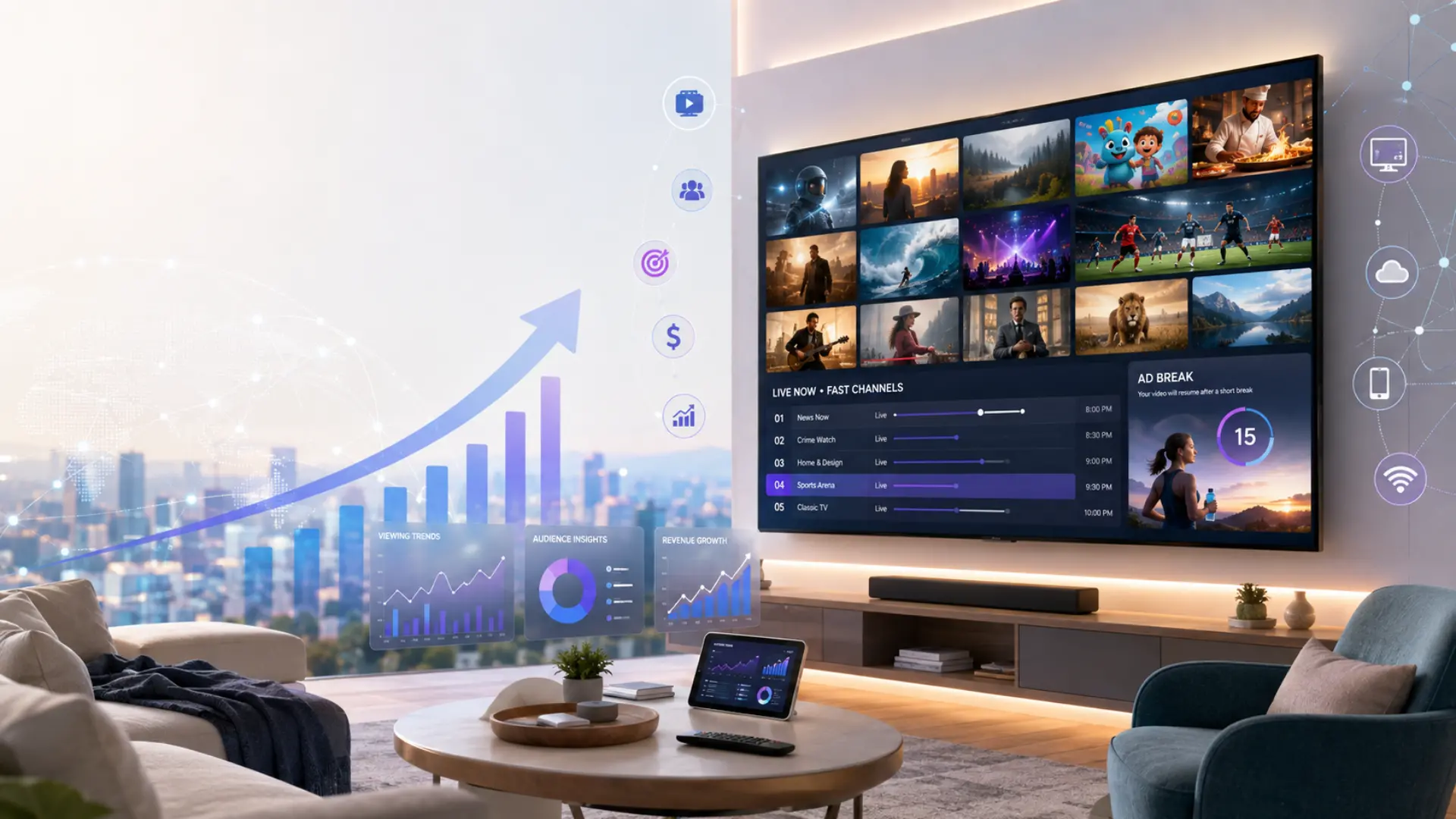
FAST channels have become one of the most important new outlets for older television shows, documentaries, movies, sports archives, lifestyle programming, reality series, niche factual entertainment, and other “library” content. Unlike subscription streaming services that often compete for exclusive premieres, FAST channels thrive on affordable, repeatable, well-packaged programming that can fill a 24/7 linear schedule and generate advertising revenue over time.
For content owners, this creates a second life for catalog titles that may no longer command premium SVOD fees. For FAST channel operators, library content is the fuel that keeps channels fresh, economical, and programmable. But the licensing process is still surprisingly manual, fragmented, and operationally complex.
This article explains how FAST channels license library content, what deal structures are common, what rights matter, how delivery works, and why the market increasingly needs more standardized licensing infrastructure.
What Is Library Content in the FAST Market?
Library content refers to previously produced programming that is no longer part of a first-run broadcast, theatrical, or premium streaming window. It can include:
-
Episodic TV series
-
Feature films
-
Documentaries
-
Reality and factual entertainment
-
Lifestyle, food, travel, home, and automotive shows
-
Sports archives and event replays
-
Stand-up comedy, music, and performance programming
-
Kids, family, and educational content
-
Niche enthusiast programming
In FAST, library content is especially valuable because FAST channels operate like traditional linear TV: they need a continuous schedule, repeatable programming blocks, and enough volume to keep viewers watching without requiring expensive original production. FAST services deliver linear-style scheduled programming for free, supported by advertising rather than subscriptions. (EMARKETER)
The Basic Licensing Model
At its simplest, a FAST channel licenses library content from a rights holder in exchange for either money, advertising revenue share, or both.
The rights holder grants the FAST channel operator or platform the right to exhibit the content in a defined way. The license usually specifies:
-
The titles or episodes covered
-
The permitted platforms
-
The territories
-
The length of the term
-
Whether the content can be used on a linear FAST channel, AVOD, or both
-
Whether the deal is exclusive or non-exclusive
-
How revenue will be reported and paid
-
Delivery requirements
-
Ad break rules and monetization rights
FAST and AVOD licensing commonly rely on revenue-sharing arrangements, although some deals include flat fees, minimum guarantees, or hybrid structures. SymphonyAI describes FAST content licensing as typically compensating owners through either a flat buyout fee or an ongoing share of advertising revenue. (SymphonyAI) The Film Collaborative similarly notes that smaller or mid-sized platforms may offer a minimum guarantee plus revenue share, or a larger ongoing revenue share for upside. (The Film Collaborative)
Who Licenses the Content?
There are usually four parties involved in FAST content licensing.
1. Rights holders
These are the companies or individuals that control the distribution rights. They may be studios, producers, distributors, sales agents, sports leagues, archives, YouTube-native media brands, or independent filmmakers.
2. FAST channel operators
These are programmers that assemble content into a branded linear channel. A channel might be built around a genre, a franchise, a celebrity, a theme, a lifestyle category, or a single large content library.
3. FAST platforms
These are the consumer-facing services where channels appear, such as smart TV operating systems, CTV apps, OEM platforms, and digital linear services. They control distribution, user experience, ad inventory rules, and often some portion of monetization.
4. Technology and playout providers
Companies such as Amagi and other cloud playout providers help schedule, encode, package, deliver, and monetize FAST channels. Amagi describes FAST distribution as a workflow involving channel creation, playout software, delivery, monetization, and platform relationships. (Amagi)
In practice, one company may play more than one role. A studio may own the rights, operate the channel, and distribute it directly. A smaller FAST programmer may license third-party libraries, create the channel, and then distribute it through larger platforms. A marketplace can sit between rights holders and channel operators to simplify discovery, dealmaking, delivery, and reporting.
Common FAST Library Licensing Deal Structures
1. Revenue Share
Revenue share is the most common structure for ad-supported streaming library deals. The content owner receives a percentage of advertising revenue generated by the content or the channel.
A simple example:
-
A FAST channel runs licensed episodes.
-
Ads are sold against the channel.
-
The platform, channel operator, ad tech partners, and rights holder each receive their share.
-
The rights holder is paid based on reported ad revenue, impressions, viewing hours, or agreed allocation rules.
AVOD agreements are often revenue-share based, with the content owner receiving a percentage of total ad revenue generated by the content. (SymphonyAI)
Revenue share is attractive because it reduces upfront risk for the channel operator. But it can be frustrating for rights holders if reporting is delayed, opaque, inconsistent, or too small to justify the administrative burden.
2. Flat Fee License
In a flat fee deal, the FAST channel or platform pays a fixed amount for the right to use the content during the license term.
This is simpler for accounting and gives the rights holder predictable revenue. But FAST operators may resist flat fees for library content unless they have strong confidence in audience demand, ad yield, platform carriage, and scheduling value.
Flat fees are more likely when:
-
The content is recognizable
-
The library is large enough to anchor a channel
-
Rights are clean and well-documented
-
The content has proven performance
-
The operator needs guaranteed access
-
The rights holder has negotiating leverage
3. Minimum Guarantee Plus Revenue Share
A minimum guarantee, or MG, gives the rights holder a guaranteed payment, while allowing the channel operator to recoup that amount from future revenue share.
For example:
-
The FAST operator guarantees $25,000 for a 12-month term.
-
The rights holder earns 40% of net advertising revenue.
-
Revenue share is applied against the guarantee until recouped.
-
After recoupment, additional payments may continue according to the agreed split.
This structure balances risk. The rights holder receives some guaranteed value, while the operator preserves upside participation.
4. Channel-Level Revenue Share
Some deals are not calculated title by title. Instead, an entire content package is licensed into a channel, and the rights holder participates in the channel’s overall net advertising revenue.
This can work well when a rights holder contributes a large portion of the channel schedule. It becomes more complicated when multiple rights holders contribute to the same feed. The operator then needs a fair allocation method based on minutes aired, viewing hours, ad impressions, content performance, or some negotiated weighting.
5. Barter or Inventory Share
In some cases, the economics are based partly on ad inventory rather than cash. A rights holder, channel operator, or platform may retain the right to sell a percentage of ad impressions.
For example:
-
The platform keeps some ad breaks.
-
The channel operator keeps some ad inventory.
-
The rights holder may receive either a revenue share or allocated inventory.
This model can be powerful when one party has strong ad sales capabilities, but it requires clear rules around fill rates, CPMs, unsold impressions, makegoods, ad decisioning, and reporting.
The Rights That Matter Most
FAST licensing is not just “Can I stream this title?” It depends on a bundle of rights that need to be clearly defined.
FAST Linear Rights
These rights allow the content to be programmed into a scheduled, linear, ad-supported streaming channel. This is the core FAST use case.
The agreement should specify whether the content can appear:
-
In a 24/7 channel
-
In a pop-up channel
-
In a temporary stunt channel
-
In themed programming blocks
-
On multiple FAST platforms
-
In a branded single-IP channel
-
In a mixed-content channel with other titles
AVOD Rights
AVOD rights allow the same content to be made available on demand, with ads. FAST and AVOD often overlap commercially, but they are not the same. FAST is scheduled linear streaming; AVOD is user-selected on-demand viewing. Many platforms want both rights, but rights holders may separate them.
Territory
Territory determines where the content may be shown. Common territory definitions include:
-
United States only
-
North America
-
English-speaking territories
-
Worldwide
-
Worldwide excluding certain countries
-
Platform-specific territories
Territory matters because content may already be licensed elsewhere. Music, talent, sports, guild, and archival clearances may also vary by country.
Term
The term is the length of the license. FAST library deals commonly run from 6 months to 3 years, depending on the content, platform, and economics. Shorter terms give rights holders flexibility. Longer terms give channel operators more scheduling stability.
Exclusivity
Most FAST library licensing is non-exclusive, especially for older catalog content. Non-exclusive deals allow a rights holder to license the same content to multiple platforms, channels, or territories.
Exclusivity may be granted when:
-
The operator pays a meaningful fee
-
The content anchors a branded channel
-
The platform wants differentiation
-
The rights holder wants a focused launch partner
-
There is a marketing commitment
But exclusivity can reduce future licensing opportunities, so rights holders should be careful. Amagi notes that content windowing can be used to maximize revenue across different distribution channels and platforms. (Amagi)
Sublicensing and Platform Distribution
A key question is whether the FAST channel operator can distribute the licensed content across multiple downstream platforms.
For example, a channel operator may want to place a channel on Roku, Samsung TV Plus, LG Channels, Vizio WatchFree+, Plex, Xumo Play, Freevee, Sling Freestream, Local Now, and other services. The agreement should clarify whether the operator has the right to include the content on all such platforms, only approved platforms, or only platforms listed in the agreement.
Editing and Formatting Rights
FAST operators may need to edit content for technical or programming reasons. The license should state whether the operator can:
-
Add ad markers
-
Insert commercial breaks
-
Create promos
-
Create clips or trailers
-
Edit for standards and practices
-
Time-compress or trim
-
Add captions, metadata, or graphics
-
Package episodes into marathons or themed blocks
These rights should be handled carefully. Rights holders may allow technical formatting but prohibit creative edits without approval.
How Content Is Selected
FAST programmers do not license library content randomly. They look for programming that helps a channel perform.
Important selection criteria include:
Volume
A FAST channel needs enough hours to avoid excessive repetition. A large episodic library is often more valuable than a small number of standalone titles.
Repeatability
Some content works well when repeated: cooking, travel, home renovation, true crime, automotive, nature, sports highlights, paranormal, classic TV, and comfort-viewing genres.
Clear audience identity
The content should fit a recognizable viewer need. FAST channels perform best when the viewer instantly understands what the channel is.
Ad suitability
Brand-safe, mid-length, episodic programming is often easier to monetize.
Technical readiness
Content with clean masters, captions, metadata, artwork, and existing ad breaks is easier to launch.
Rights clarity
FAST operators prefer content with clean chain of title, music rights, talent releases, and territory availability.
Scheduling utility
A 40-episode series may be more useful than a single film because it can support marathons, dayparts, and recurring blocks.
The FAST Licensing Workflow
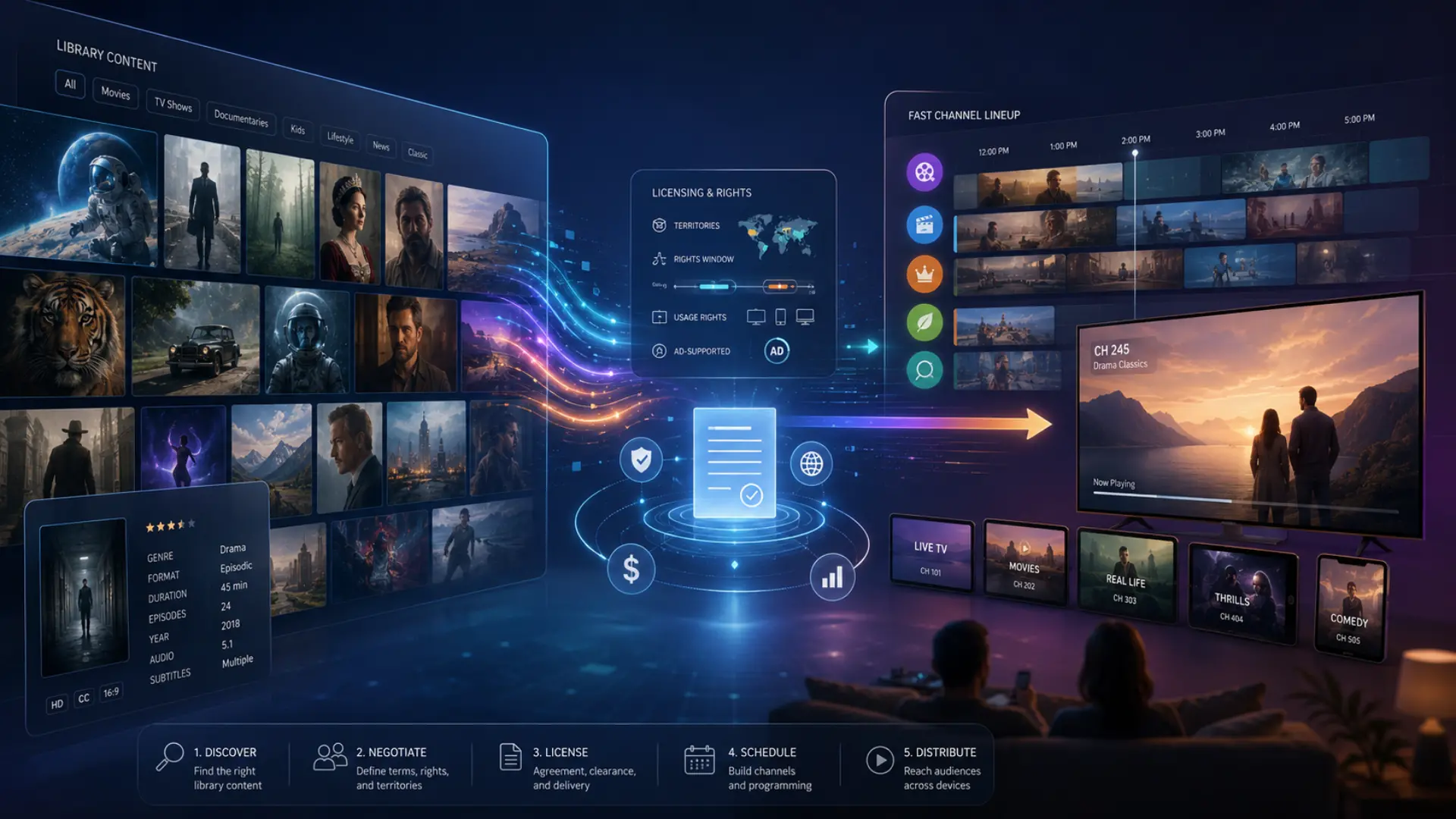
Although every company handles it differently, the typical workflow looks like this.
Step 1: Content Discovery
The FAST operator identifies a programming need. For example:
-
“We need 200 hours of food and travel.”
-
“We need crime documentaries for a late-night block.”
-
“We need female-skewing reality series.”
-
“We need sports-adjacent lifestyle content.”
-
“We need backfill content for unsold schedule hours.”
Content discovery often happens through personal relationships, sales agents, spreadsheets, rights catalogs, film markets, distributors, and manual outreach. This is one of the least efficient parts of the business.
Step 2: Rights and Availability Review
The rights holder provides avails, which list what content is available, in which territories, for which rights, and for what term.
The FAST operator checks:
-
Is FAST included?
-
Is AVOD included?
-
Are the rights exclusive elsewhere?
-
Are there holdbacks?
-
Are there music restrictions?
-
Are there union or residual obligations?
-
Are there platform restrictions?
-
Are captions and metadata available?
-
Are there any advertiser category restrictions?
Step 3: Screening
The operator reviews screeners or sample episodes to determine whether the content fits the channel. Screening is both creative and commercial. A title may be good but still not fit the audience, schedule, or monetization profile.
Step 4: Deal Negotiation
The parties negotiate:
-
Revenue share percentage
-
Minimum guarantee, if any
-
Territory
-
Term
-
Platforms
-
Exclusivity
-
Reporting cadence
-
Payment timing
-
Delivery obligations
-
Takedown rights
-
Marketing commitments
-
Warranties and indemnities
This step often takes longer than the actual technical delivery.
Step 5: Contracting
The parties sign a license agreement or content distribution agreement. In a more efficient workflow, this could be based on standardized terms with a title-level schedule or exhibit.
Step 6: Materials Delivery
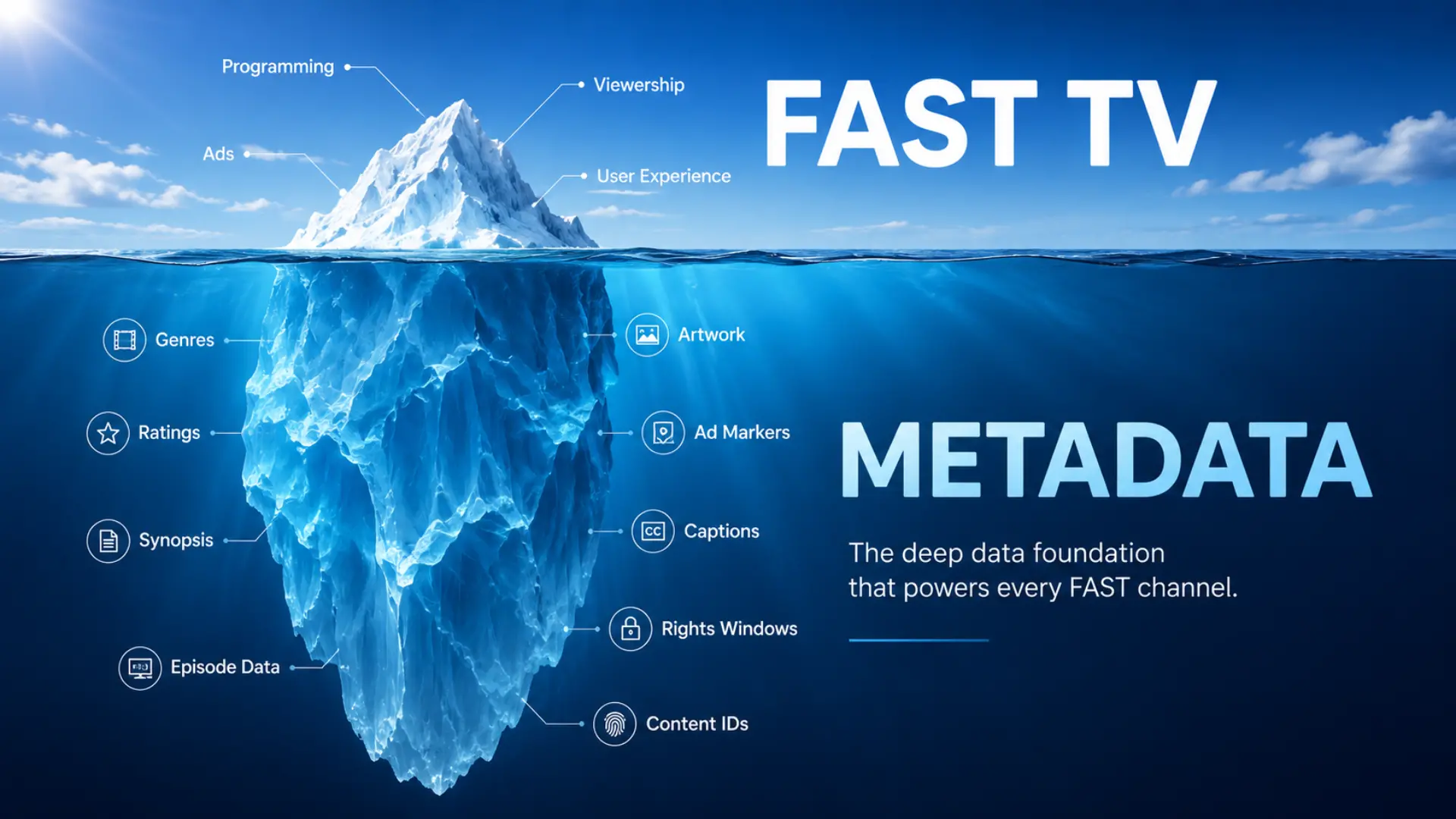
The rights holder delivers the required assets, usually including:
-
Video masters
-
Captions or subtitles
-
Metadata
-
Artwork
-
Episode synopses
-
Ratings
-
Runtime information
-
Ad break markers
-
Language information
-
Territory restrictions
-
Rights metadata
Delivery may happen through cloud storage, Aspera, Signiant, FTP, S3, MRSS feeds, or a marketplace delivery pipeline. MRSS and HLS are commonly discussed in FAST technical workflows because channels need structured metadata and streaming-ready assets. (Molten Cloud)
Step 7: Ingest, QC, and Scheduling
The operator or technology partner ingests the content, checks files, maps metadata, validates captions, creates schedules, inserts ad markers, and prepares the channel feed.
FAST channels need high-quality packaging and scheduling to stand out in a crowded market, especially as the number of channels grows and competition for audience attention increases. (Mediagenix)
Step 8: Distribution to Platforms
The channel is distributed to FAST platforms. Depending on the architecture, the operator may deliver:
-
A live linear stream
-
A cloud playout feed
-
An EPG schedule
-
VOD assets
-
Metadata feeds
-
MRSS feeds
-
SCTE ad markers
-
Platform-specific artwork and descriptions
Step 9: Reporting and Payment
Once the content is live, the operator must report performance and revenue. This may include:
-
Viewing hours
-
Ad impressions
-
Gross ad revenue
-
Platform deductions
-
Net revenue
-
Revenue share owed
-
Territory performance
-
Title-level or channel-level usage
-
Payment status
This is where FAST licensing becomes operationally painful. Revenue data can arrive from different platforms in different formats, cadences, and currencies. Molten Cloud notes that FAST royalty calculations are more complex than fixed-fee SVOD licenses because ad revenue data can arrive inconsistently across platforms. (Molten Cloud)
What Rights Holders Should Watch For
Rights holders should not simply accept any FAST deal because “found money” is better than nothing. A poorly structured deal can create conflicts, reporting problems, or lost future value.
Key issues include:
Net Revenue Definitions
“Net revenue” can mean many things. The agreement should clearly define what deductions are allowed before the revenue share is calculated.
Common deductions may include:
-
Platform fees
-
Ad sales commissions
-
Ad serving fees
-
Technology fees
-
Encoding costs
-
Delivery costs
-
Taxes
-
Agency fees
-
Third-party costs
The broader the deductions, the lower the rights holder’s payment.
Reporting Transparency
Rights holders should require regular reporting, ideally title-level or at least usage-based reporting. Quarterly reporting is common, but monthly reporting is better when data is available.
Audit Rights
The rights holder should have the right to audit the operator’s records if payments appear inaccurate.
Platform Approval
If the license permits broad sublicensing, the rights holder may want approval rights over certain downstream platforms, especially if the content has brand sensitivity or conflicting deals.
Holdbacks
A holdback prevents the content from being used in certain ways or on certain platforms. Rights holders need to ensure FAST licensing does not violate prior SVOD, broadcast, cable, educational, airline, international, or AVOD deals.
Ad Category Restrictions
Some rights holders may want to restrict ads for alcohol, gambling, political advertising, adult products, or other sensitive categories.
Takedown Rights
The agreement should provide a process for removing content if rights expire, claims arise, files are defective, or a platform violates restrictions.
What FAST Channels Care About
FAST channel operators have a different set of concerns.
They want content that is:
-
Affordable
-
Cleared for FAST
-
Easy to deliver
-
Easy to schedule
-
Suitable for ads
-
Available for enough time to build audience
-
Packaged with metadata and artwork
-
Capable of repeat viewing
-
Not already overexposed everywhere else
-
Rights-clean across target platforms
They also care deeply about operational efficiency. If a library takes weeks of manual rights review, file chasing, metadata cleanup, and contract negotiation, it may not be worth the effort unless the content is unusually strong.
This is why standardized content marketplaces are valuable. They reduce transaction friction and let channels find, license, ingest, and report on library content faster.
Why Library Content Works So Well for FAST
Library content is a strong fit for FAST because the economics are different from premium SVOD.
Subscription streaming is often driven by exclusivity, originals, and subscriber acquisition. FAST is driven by audience retention, ad impressions, low acquisition cost, and repeatable programming.
Library content can work well because:
-
It is already produced.
-
It can be licensed at lower cost than originals.
-
It often has long-tail audience appeal.
-
It can fill large schedule blocks.
-
It can be repackaged into themed channels.
-
It can monetize through advertising over time.
-
It can reach viewers who would never search for it on demand.
FAST has also revived the value of linear programming. Viewers do not always want to search. Sometimes they want a lean-back experience: turn on a channel and watch whatever is playing. That makes curation, scheduling, and packaging just as important as the individual title.
Why Licensing Is Still So Manual
Despite the growth of FAST, library licensing is still often handled through emails, spreadsheets, PDFs, calls, file links, and custom contracts.
Common pain points include:
-
Rights information is incomplete or outdated.
-
Avails are shared in inconsistent spreadsheet formats.
-
Screeners are scattered across private links.
-
Deal terms vary by rights holder and platform.
-
Content delivery is slow and manual.
-
Metadata must be normalized.
-
Ad break markers may be missing.
-
Reporting is inconsistent.
-
Payment reconciliation is complicated.
-
Small deals can cost too much to administer.
This creates a paradox: FAST needs lots of content, but many library licensing transactions are too small or too operationally burdensome to process efficiently.
The Role of Marketplaces in FAST Content Licensing
A licensing marketplace can solve many of these problems by creating a structured environment where rights holders and FAST channels can transact more efficiently.
A strong FAST licensing marketplace should provide:
Searchable Content Discovery
Channels should be able to search by genre, format, runtime, language, rights, territory, audience, content type, and technical readiness.
Standardized Rights Metadata
Every title should clearly show whether FAST, AVOD, territory, term, exclusivity, and platform rights are available.
Screening Room Access
Buyers should be able to preview content without chasing private links.
Standardized Deal Terms
Not every deal needs a bespoke contract. Many library deals can use standardized terms with configurable economics.
Instant or Streamlined Licensing
For lower-friction content, channels should be able to license titles quickly rather than negotiate for weeks.
Integrated Delivery
The platform should support delivery into FAST workflows, including metadata, artwork, captions, video files, and MRSS-style feeds.
Usage and Revenue Reporting
Rights holders need real reporting: what played, where it played, how much viewing occurred, and what revenue was generated.
Consolidated Invoicing and Payments
A marketplace can aggregate many small licensing relationships into a cleaner payment and reporting flow.
For the FAST ecosystem, this kind of infrastructure is not just convenient. It may become necessary as the number of channels, platforms, and content owners continues to grow.
Example: A Typical Library Content Deal
Imagine a rights holder owns 150 episodes of a travel series.
A FAST channel operator wants to use the series as backfill content across a travel and lifestyle channel.
A possible deal might look like this:
-
Rights: FAST linear and AVOD
-
Territory: United States and Canada
-
Term: 24 months
-
Exclusivity: Non-exclusive
-
Platforms: Approved FAST platforms and owned-and-operated apps
-
Economics: 50% of net advertising revenue attributable to the content
-
Reporting: Quarterly usage and revenue reports
-
Delivery: HD masters, captions, metadata, artwork, and ad break markers
-
Payment: 45 days after quarter-end
-
Takedown: Required within 10 business days after rights expiration or notice of claim
For a larger or more valuable library, the rights holder might request a minimum guarantee. For a smaller or experimental library, the parties might agree to revenue share only.
Key Contract Terms in FAST Library Licensing
A FAST library license should generally address:
-
Licensed content
-
Licensed rights
-
Territory
-
Term
-
Exclusivity
-
Authorized platforms
-
Linear FAST rights
-
AVOD rights
-
Promotional rights
-
Editing and formatting rights
-
Ad insertion rights
-
Revenue share
-
Net revenue definition
-
Reporting cadence
-
Payment timing
-
Audit rights
-
Delivery specifications
-
Metadata requirements
-
Captions and accessibility
-
Warranties
-
Indemnities
-
Takedown process
-
Termination rights
-
Most favored nation clauses, if any
-
Guild, music, and residual responsibilities
-
Data-sharing obligations
The most important point: FAST rights should be explicit. Older agreements may mention “internet,” “digital,” “streaming,” or “AVOD” without clearly addressing FAST linear channels. That ambiguity can create problems.
FAST vs. AVOD Licensing
FAST and AVOD are often discussed together, but they are different licensing uses.
FAST is scheduled, linear, channel-based programming. The viewer tunes into a stream.
AVOD is on-demand, title-based viewing. The viewer chooses a specific program.
A single content deal may include both, but the agreement should not assume they are identical. Some rights holders may want to grant FAST but not AVOD. Others may prefer AVOD because title-level reporting is easier. Platforms often want both because linear channels and on-demand libraries can reinforce each other.
Why Backfill Content Matters
Backfill content is library programming used to fill out a schedule, refresh a channel, replace underperforming blocks, support dayparts, or keep a channel from becoming repetitive.
For FAST operators, backfill content is essential because:
-
Channels need hundreds or thousands of programming hours.
-
Viewer fatigue increases when the same episodes repeat too often.
-
Platforms expect channels to stay fresh.
-
Ad revenue depends on sustained viewing.
-
Niche channels often need affordable volume.
-
Not every hour can be filled with premium anchor content.
The best backfill content is not filler in the negative sense. It is efficient, relevant, rights-cleared programming that supports the channel’s identity and keeps the schedule healthy.
The Future of FAST Library Licensing
FAST licensing is likely to become more data-driven, standardized, and automated.
Expect more emphasis on:
-
Title-level performance data
-
Dynamic content replacement
-
AI-assisted scheduling
-
Automated rights checks
-
Standardized FAST rights language
-
Programmatic licensing marketplaces
-
Better metadata normalization
-
Faster technical delivery
-
Consolidated royalty reporting
-
Performance-based pricing
-
Shorter test windows before larger commitments
As FAST matures, content owners will need to think less like one-time licensors and more like yield managers. A library title may have different value depending on territory, channel context, ad category, seasonality, platform, and audience behavior.
At the same time, FAST channel operators will need better ways to source content without drowning in manual deal flow. The winners will be the companies that can combine programming taste, rights discipline, ad monetization, and operational automation.
Conclusion
FAST channels license library content through a mix of revenue-share deals, flat fees, minimum guarantees, and hybrid arrangements. The core licensing questions are familiar—rights, territory, term, exclusivity, economics, delivery, and reporting—but FAST adds its own complexity because content is programmed into ad-supported linear streams across many platforms.
For rights holders, FAST can unlock new value from underutilized libraries. For channel operators, library content provides the scale and freshness needed to compete in a crowded market. But the current process is still too manual, too fragmented, and too dependent on spreadsheets and bespoke negotiations.
The next phase of FAST licensing will be defined by marketplaces, standardized terms, better rights metadata, streamlined delivery, and transparent reporting. In other words, the opportunity is not just to license more library content. It is to make library content easier to discover, evaluate, clear, deliver, monetize, and report across the entire FAST ecosystem.